Joint inflammation and osteoarthritis can affect a horse’s comfort, movement and ability to perform. With a range of treatment options available, finding the right approach for each horse is an important part of managing joint health.
At Hook Norton Veterinary Group, we offer Alpha2EQ, an innovative treatment that uses a concentrated protein derived from your horse’s own blood to help manage joint inflammation.
Alpha2EQ provides a non-steroid treatment option that may be worth considering for certain horses, depending on their clinical needs, workload and long-term management goals.
In this article, we explain what Alpha2EQ is, how the treatment works and which horses it may be suitable for.
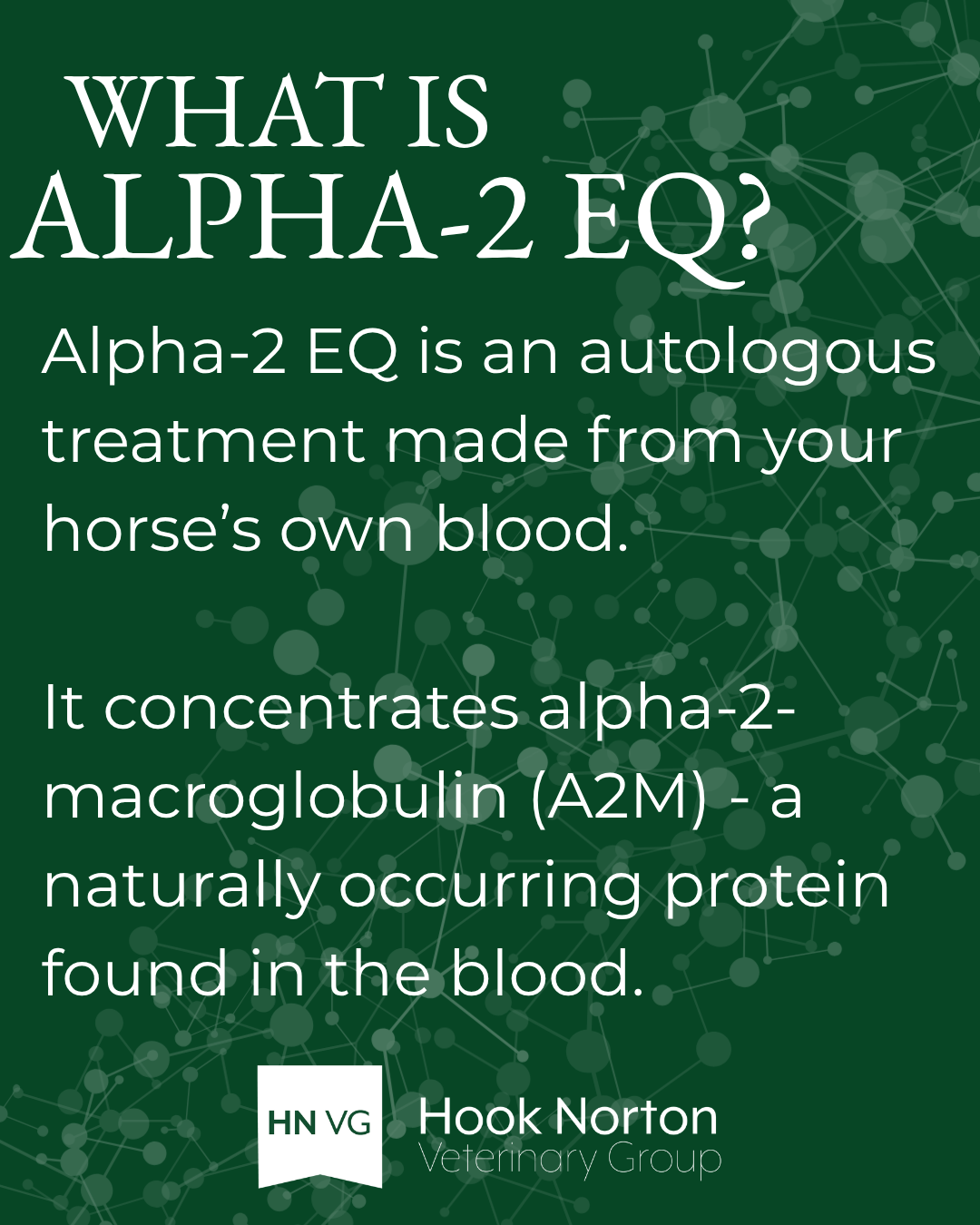
Alpha2EQ is an equine joint treatment that concentrates alpha-2-macroglobulin, a naturally occurring protein found in blood.
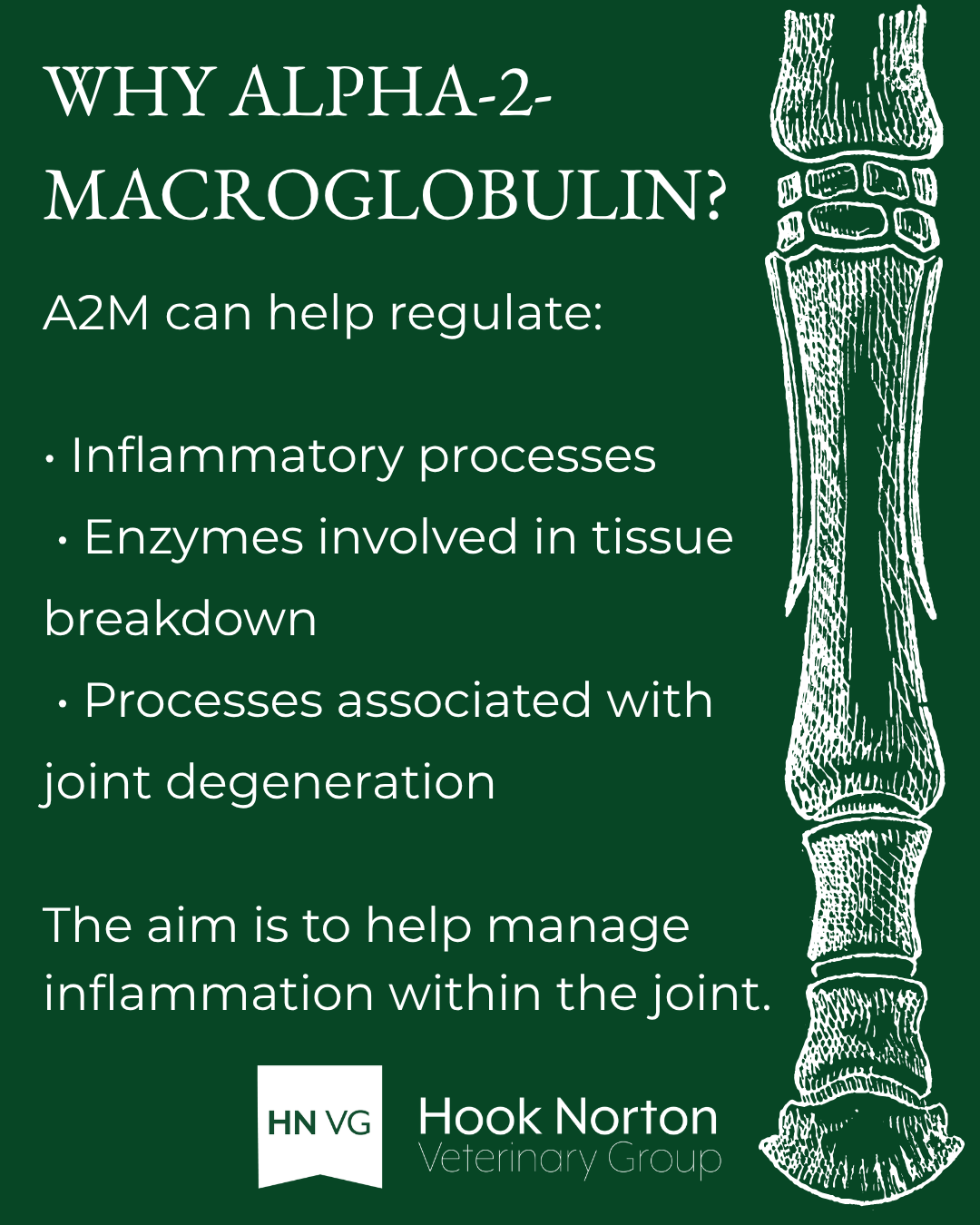
Alpha-2-macroglobulin plays a role in regulating inflammatory processes and inhibiting enzymes that can contribute to cartilage damage. By concentrating this protein and injecting it directly into an affected joint, Alpha2EQ aims to help manage the processes involved in joint inflammation.
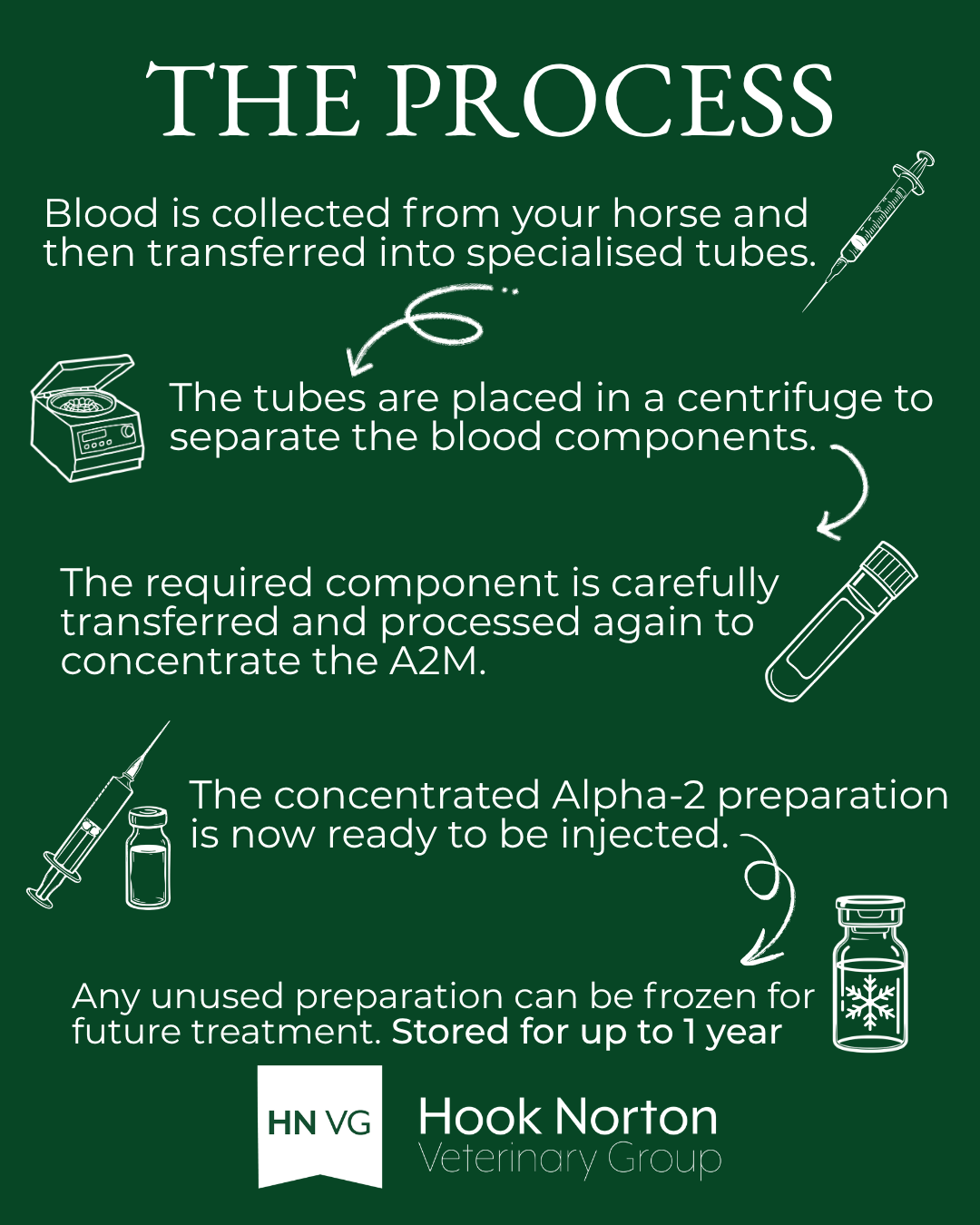
The treatment uses a sample of your horse’s own blood, which is processed to produce a concentrated preparation for injection into the affected joint.
Alpha2EQ is one of the options that may be considered as part of an individualised approach to equine joint health, including the management of osteoarthritis and associated inflammation.
Joint inflammation can contribute to discomfort and changes in movement. In conditions such as osteoarthritis, inflammatory processes and enzymes that break down components of cartilage can play a role in the ongoing changes within the joint.
Alpha-2-macroglobulin helps regulate these processes by inhibiting certain enzymes involved in inflammation and tissue breakdown.
Alpha2EQ concentrates this naturally occurring protein from your horse’s blood for administration directly into the affected joint.
The aims of treatment include:
As with any veterinary treatment, individual responses can vary. Alpha2EQ should not be viewed as a cure for osteoarthritis or a guarantee that existing cartilage damage will be reversed. Your vet can discuss the potential benefits, limitations and suitability of treatment for your horse.
Alpha2EQ uses your horse’s own blood to prepare the concentrated protein for treatment. Our Equine Team can guide you through the process and explain what is involved.
Watch our video below to see the full Alpha2EQ process at Hook Norton Veterinary Group.
The treatment involves collecting a blood sample, processing it to concentrate the alpha-2-macroglobulin and administering the resulting preparation into the affected joint.
Your vet will assess your horse’s condition and determine whether Alpha2EQ is an appropriate option. The specific treatment plan, including which joints are treated, will depend on your horse’s individual clinical needs.
Alpha2EQ may be considered for a range of horses where joint inflammation is a concern. It can be particularly worth discussing in situations where a non-steroid option is desirable.
For horses in competition, managing joint health needs to be considered alongside their training and competition schedules.
Alpha2EQ may offer an alternative to corticosteroid joint injections in selected cases. However, competition horses must comply with the medication rules of their relevant governing body, including any applicable detection times or withdrawal requirements. These should always be discussed with your vet before treatment.
In some young horses, your vet may wish to explore non-steroid options when developing a joint management plan.
The most appropriate approach will depend on the horse’s age, diagnosis, the joint involved and the intended future workload. Alpha2EQ may be one option to discuss following a veterinary assessment.
Some horses experience joint problems affecting more than one area. Where multiple joints require treatment, the choice of treatment needs to take into account the horse’s overall condition and individual circumstances.
Alpha2EQ may be considered when your vet is assessing options for managing inflammation in multiple joints. Suitability will depend on the clinical assessment and the proposed treatment plan.
Weight management is an important part of maintaining joint health, as excess weight can increase the load placed on joints.
For horses that are overweight or prone to laminitis, your vet may wish to consider alternatives to corticosteroid joint injections in appropriate cases.
Alpha2EQ is a non-steroid option that may be worth discussing. However, being overweight or prone to laminitis does not automatically make a horse suitable for this treatment. A full veterinary assessment is important when deciding on the safest and most appropriate approach.
No. Alpha2EQ is a non-steroid treatment that uses concentrated alpha-2-macroglobulin derived from your horse’s own blood.
Corticosteroids are sometimes used in equine joint injections to help manage inflammation. However, they may not be the preferred option for every horse or every clinical situation.
Alpha2EQ offers another approach to consider when discussing treatment options with your vet. The choice between treatments will depend on the individual horse, the nature of the joint problem, previous treatments and the horse’s future requirements.
Your vet can explain the advantages and limitations of the available options and help you make an informed decision.
No single joint treatment is appropriate for every horse.
Before recommending Alpha2EQ, your vet will consider factors such as:
Alpha2EQ may form part of a wider management plan that also considers exercise, rehabilitation, weight management and other veterinary treatments where appropriate.
The aim is to find an approach that suits the individual horse, rather than relying on one treatment for every case.
At Hook Norton Veterinary Group, we understand that every horse and rider has different needs, priorities and future goals.
Whether you have a competition horse, a young horse in training or an older horse experiencing joint stiffness, our Equine Team can discuss the investigation and treatment options available.
As an independent veterinary practice, we believe in tailoring treatment plans to the individual horse, taking into account clinical needs, expectations and budget. We want you to understand the options available and feel confident about the decisions you make for your horse.
Alpha2EQ may be one option to consider when managing joint inflammation, but it is important to assess each horse individually to determine the most appropriate approach.
Would you like to find out more about Alpha2EQ for your horse?
Contact the Hook Norton Veterinary Group Equine Team to discuss your horse’s joint health and explore the treatment options available.
We are always happy to talk through the possibilities and help you find an approach tailored to your horse.