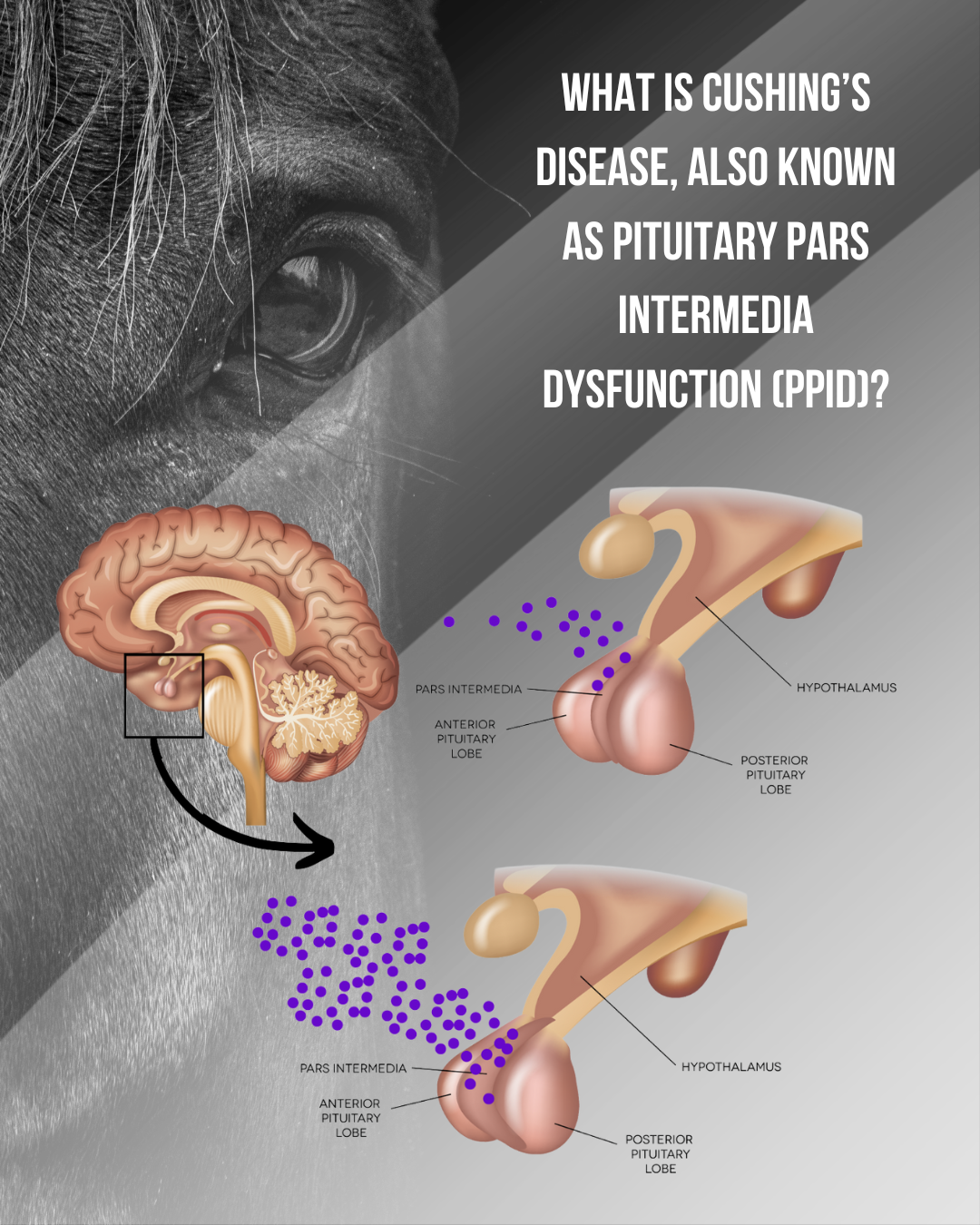
PPID is a condition that affects the pituitary gland, a small but important gland at the base of the brain. In horses with PPID, part of the pituitary gland becomes enlarged and overactive, producing excessive amounts of hormones, especially adrenocorticotropic hormone (ACTH). This hormone overstimulates the adrenal glands, disrupting the horse’s normal hormonal balance. ACTH (adrenocorticotropic hormone) can disrupt the horse’s immune system and metabolism.
PPID most commonly affects horses over the age of 15 years old, although it can occur earlier. PPID can occur in any breed; however, ponies can be more prone to it and miniature horses and Shetland ponies are at higher risk of PPID occurring.
Horses with metabolic issues, such as Equine Metabolic Syndrome (EMS), may be at a higher risk. EMS and PPID cause hormone imbalances (such as insulin resistance), which can contribute to the development of laminitis due to elevated blood glucose levels.
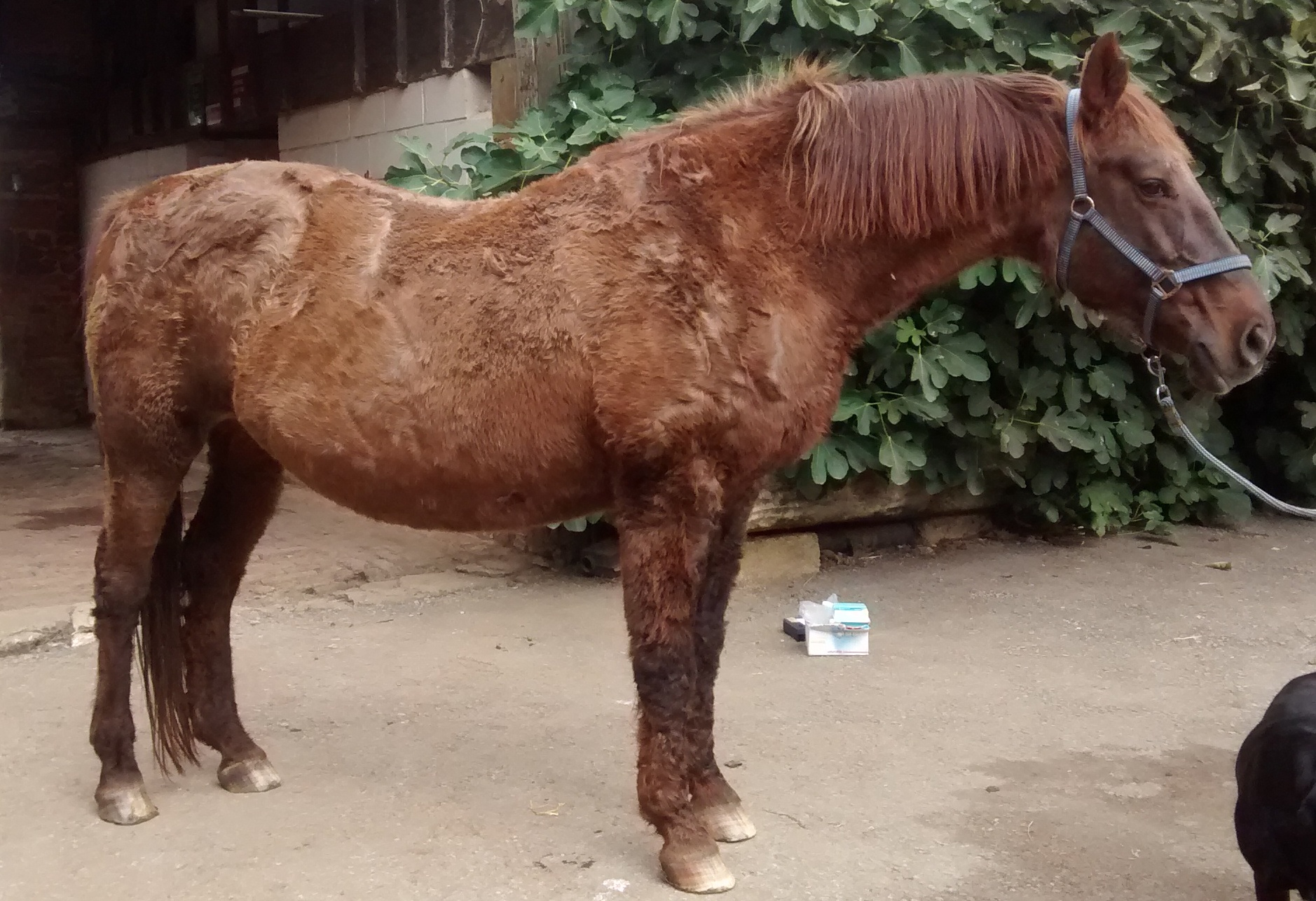
> Long, curly coat that doesn’t shed properly (especially in spring)
> Increased thirst and urination
> Muscle wasting (particularly along the top line)
> Pot-bellied appearance
> Lethargy
> Frequent infections (skin, hoof abscesses)
> Laminitis
Diagnosis.
Your vet will examine the horse and discuss the symptoms with you. Blood tests are then used to measure the ACTH levels to evaluate how your horse’s pituitary gland is functioning. In cases which are borderline or detected early, a TRH (Thyrotropin-Releasing Hormone) stimulation test can be used to give a clearer idea of hormone production under stimulation.
Treatment.
Whilst there is no cure for the PPID, it can be managed effectively with medication and supportive treatment.
The main medication used is pergolide mesylate (Prascend® or Pergoquin®). This medication helps regulate hormone production and reduce symptoms. It is given daily and is often lifelong.
Other management includes regular veterinary exams and blood tests, good nutrition (low-sugar, low-starch diet), farriery (especially for those prone to laminitis), routine dental and parasite control and clipping may be required for horses with thick coats that don’t shed.
Contact us if you think your horse or pony is showing signs of PPID, or if you have questions about your horse or pony that is currently on medication.