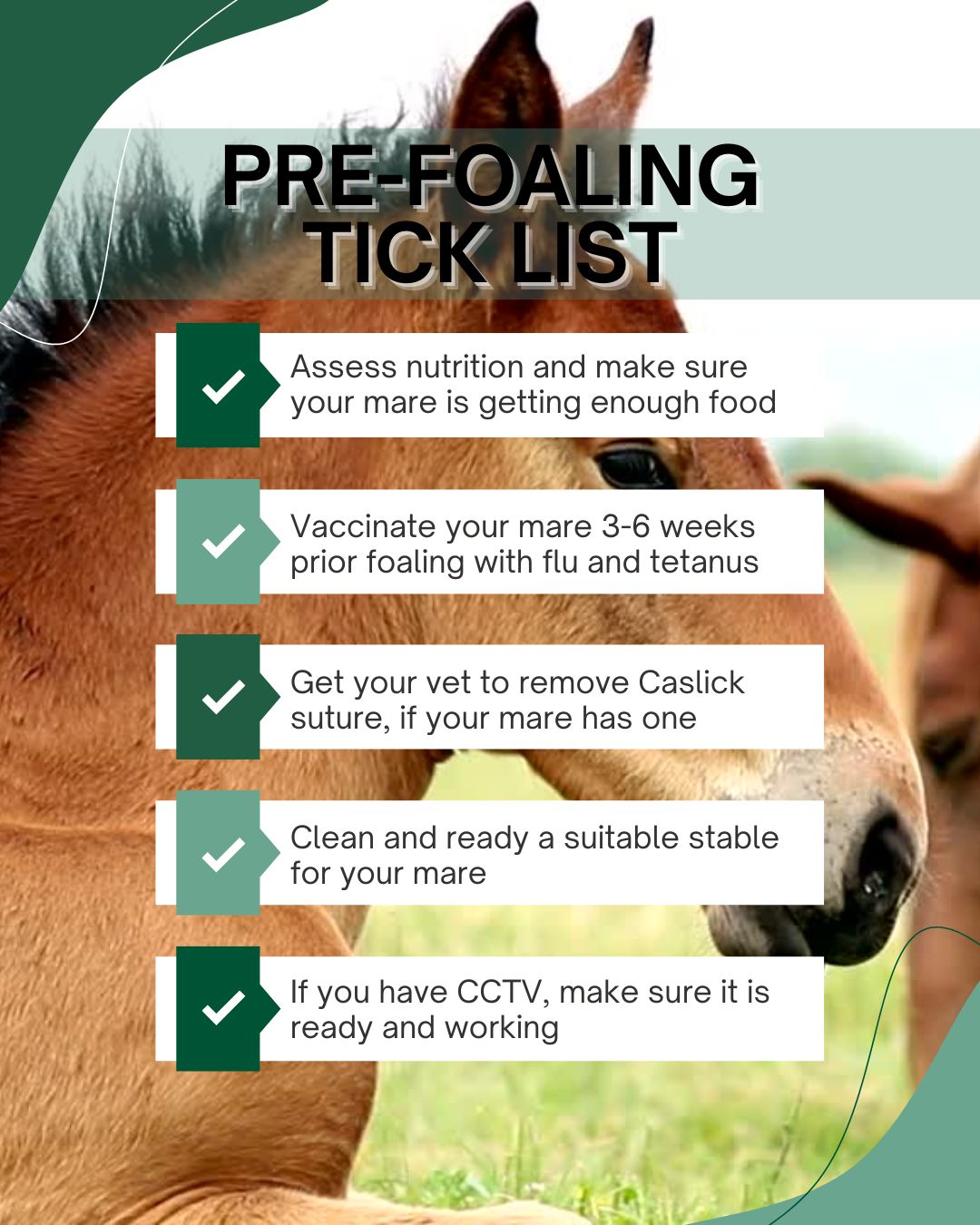
The mare shouldn’t be thin or overweight during her pregnancy, and in the last 3 months, her level of nutrition should be increased due to the foal’s development in the last trimester (we suggest you speak to your nutritionist to gain feeding advice tailored to your mare). The mare should be vaccinated against influenza and tetanus 3-6 weeks prior to foaling, which will ensure maximum protection is passed to the foal. Close to the foaling date, it is important to remove the mare’s shoes to prevent any risk of injuries to the foal. If your mare has a Caslick suture, please ask your vet to remove it before her due date. A suitable stable or paddock for foaling should be ready and the mare should be moved there at least one month before the foaling date to make sure that they get used to the environment. Mares can be foaled outside, but as the UK weather is unpredictable, it is recommended you provide a clean, secure and dry area/stable. For bedding, use plenty of straw. I recommend straw over shavings, as they tend to stick to the newborn foals. CCTV cameras can be of great help to allow you to monitor the situation while providing your mare with a quiet environment.
The gestation period of the mare is very variable and could be anything between 320-350 days. However, some mares can carry the foal for as long as 370 days. Udder development (usually 2-4 weeks before foaling), changes in temperament, softening and flattening of the muscles in the croup and waxing up (waxy secretions from the teats 1-4 days prior to delivery) are all signs to look for when your mare’s due date is close.
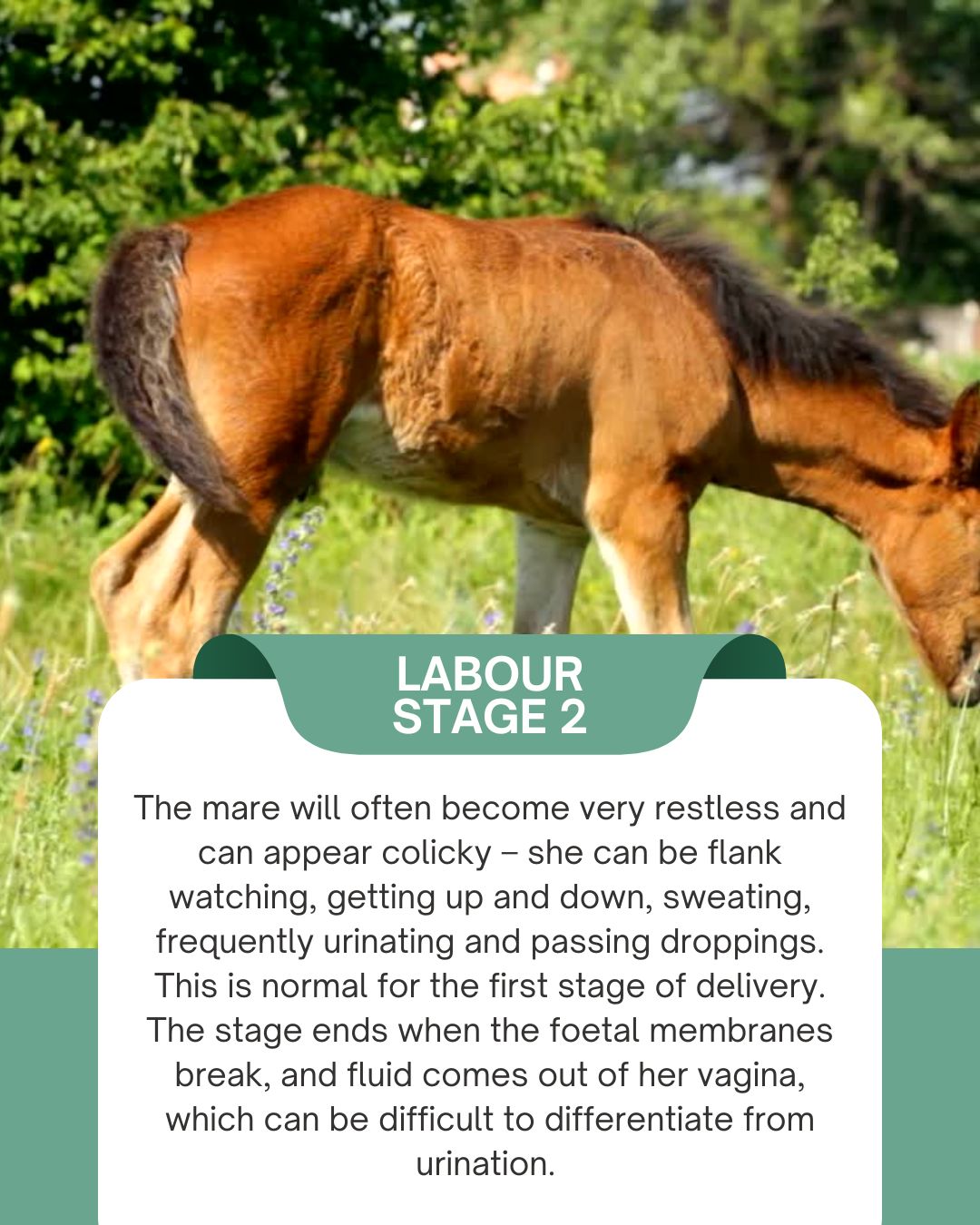
1st Stage: The mare will often become very restless and can appear colicky – she can be flank watching, getting up and down, sweating, frequently urinating and passing droppings. This is normal for the first stage of delivery. The stage ends when the foetal membranes break, and fluid comes out of her vagina, which can be difficult to differentiate from urination.
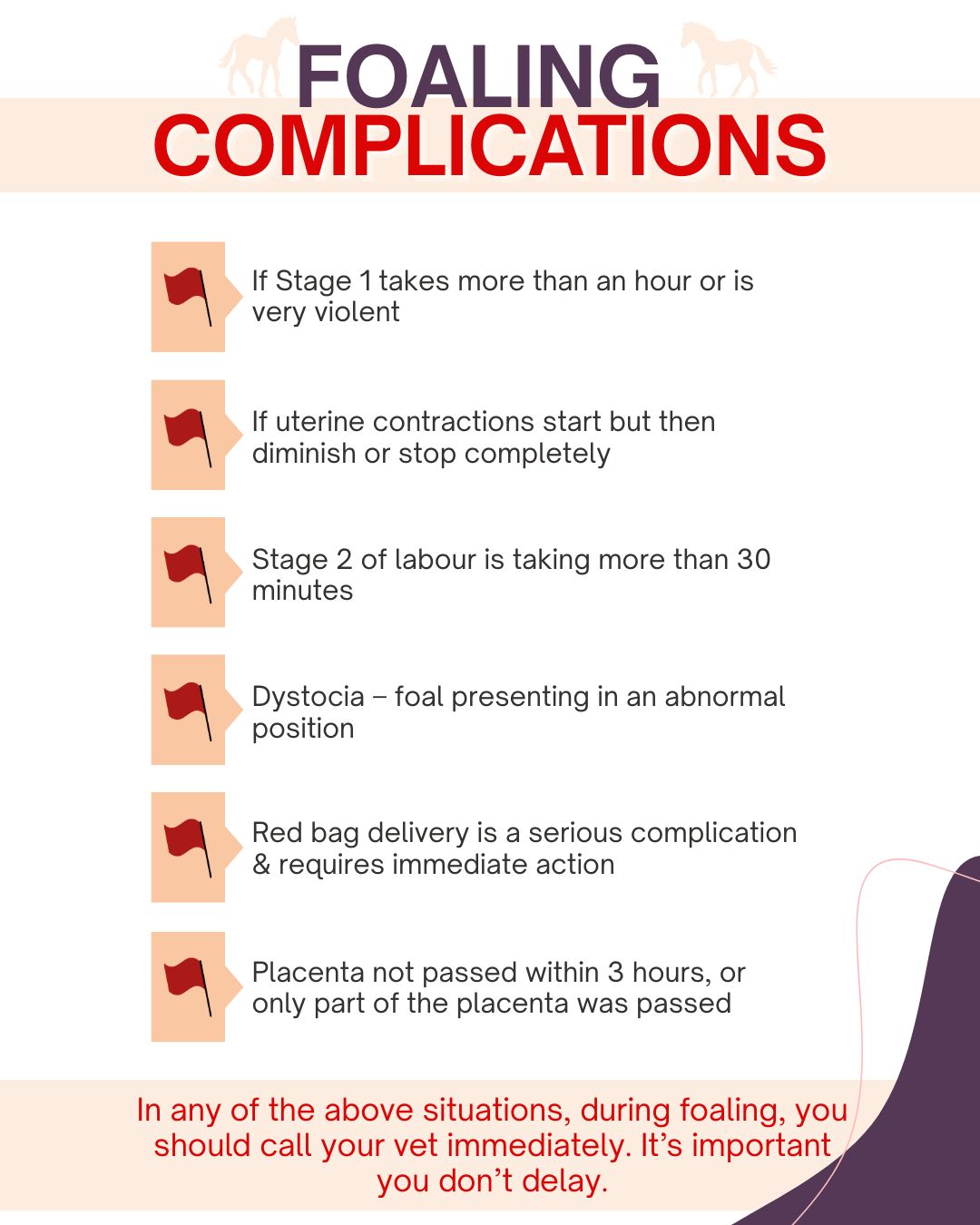
If the signs are very violent or last for more than one hour, it is important to contact your vet.
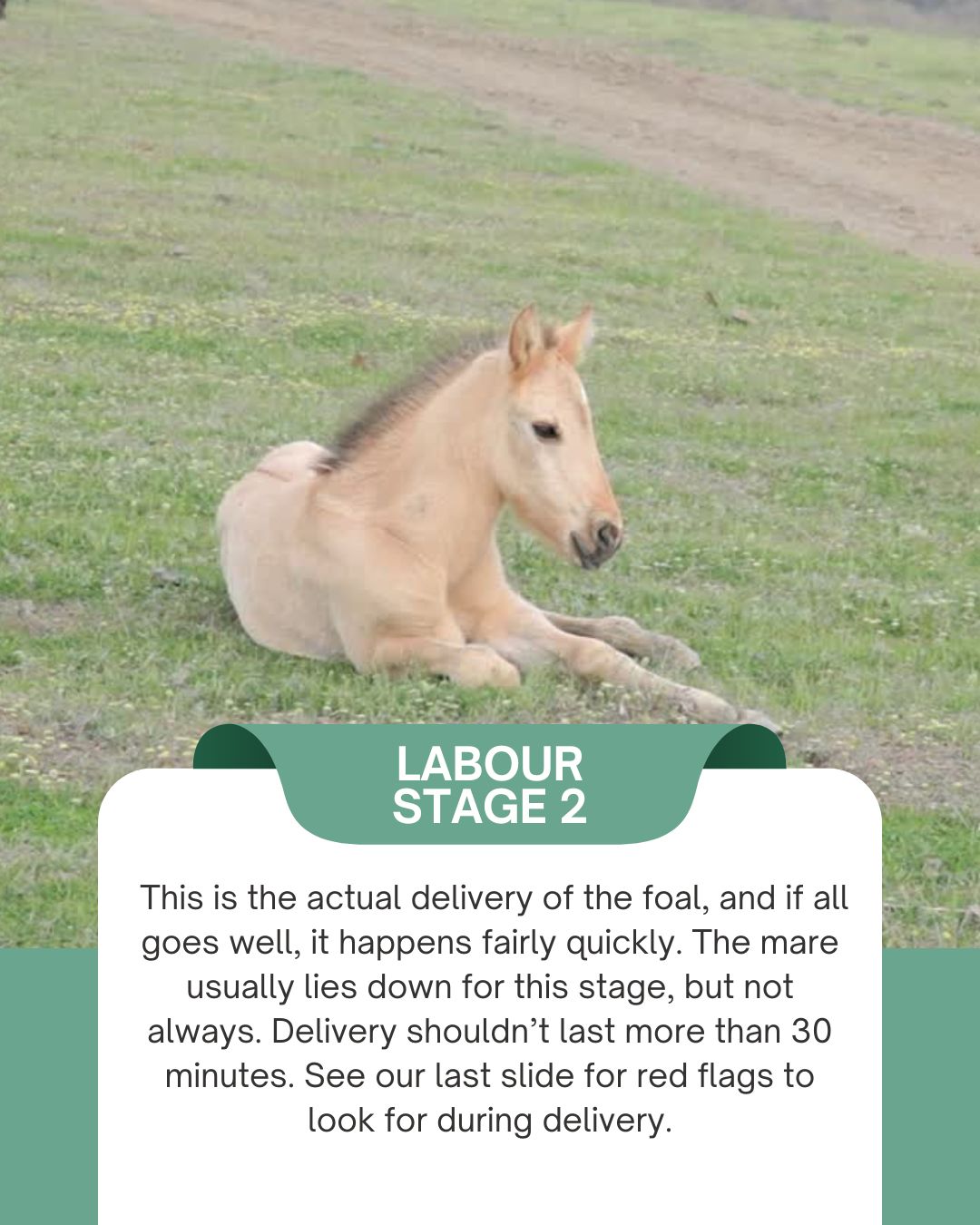
2nd Stage: This is the actual delivery of the foal, and if all goes well, it happens fairly quickly. The mare usually lies down for this stage, but not always. Delivery shouldn’t last more than 30 minutes, and it is good to set a timer so you know the exact time she has been in stage 2 labour. If there is no significant progress within 15 minutes or if this stage lasts for more than 30 minutes, you should contact your vet immediately. Normally, foals are born in the diving position with the front legs first (hooves pointing down), then the nose, head, shoulders and hindquarters. If you see that the foal is in a different position (for example, the hooves are pointing up, or you see just one leg and a head), contact the vet immediately.
It is important to note that normal fetal membranes are translucent, yellow or white. Red bag delivery is a serious complication and requires immediate action from the person attending the foaling. If you see a red/maroon membrane covering the foal you must tear it immediately to allow the foal to breathe. It is also necessary to pull the foal out (gently) as soon as possible. However, bear in mind that in rare cases, it could be an inverted mare’s bladder, and therefore, it is important to feel the foal’s bones first through the membrane before tearing it – contact your vet for advice as soon as possible.
3rd Stage: This stage involves the passing of the placenta, and it should usually happen within 3 hours after the foal is born. If the placenta is not passed within 3 hours, please contact the vet immediately – retained foetal membranes can pose life-threatening risks to the mare. In addition, please check that the placenta is whole because, in some cases, only part of the placenta is passed. Veterinary attention will be needed if any placenta is left in the mare. If you are in doubt, send us a photo of the placenta or store it safely so we can check it when we attend the mare and foal for the post-foaling check.