News

Managing Equine Metabolic Conditions in Horses

November 28, 2025 | by Charlie Hands | Equine

Managing Equine Metabolic Conditions in Horses During Winter

As winter approaches, many horses need a more considered nutrition plan — especially those with metabolic conditions. Equine Metabolic Syndrome (EMS) and Cushing’s Disease (PPID) both affect how horses handle sugar, maintain weight and cope with changes in forage quality. Cold weather, reduced grazing, and fluctuating exercise levels can make winter a challenging time for metabolic horses.

With the right management, feeding strategies and regular monitoring, you can help keep your horse comfortable, healthy and one step ahead of potential winter flare-ups.

Why Winter Can Be More Challenging for Metabolic Horses

Winter often brings:

🧈 Higher reliance on hay, which varies in sugar levels

🏃🏻‍♀️ Reduced exercise opportunities

🥶 Colder temperatures increase calorie needs

◽ Increased risk of laminitis in sugar-sensitive horses

⏲️ Weight gain in EMS horses or weight loss in PPID horses

Understanding how these conditions affect metabolism helps you tailor a feeding plan that supports your horse throughout the colder months.

Equine Metabolic Syndrome (EMS)

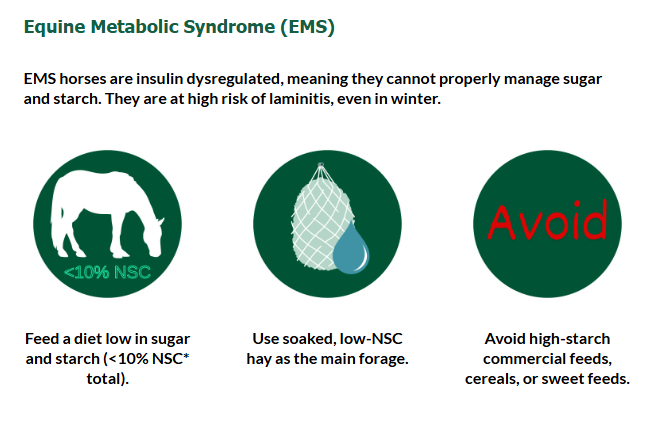
Horses with EMS are insulin dysregulated, meaning they cannot manage sugar and starch effectively. Even during winter, when grass growth is low, these horses remain at high risk of laminitis.

Key Winter Feeding Strategies for EMS Horses

1. Feed a Low-NSC Diet

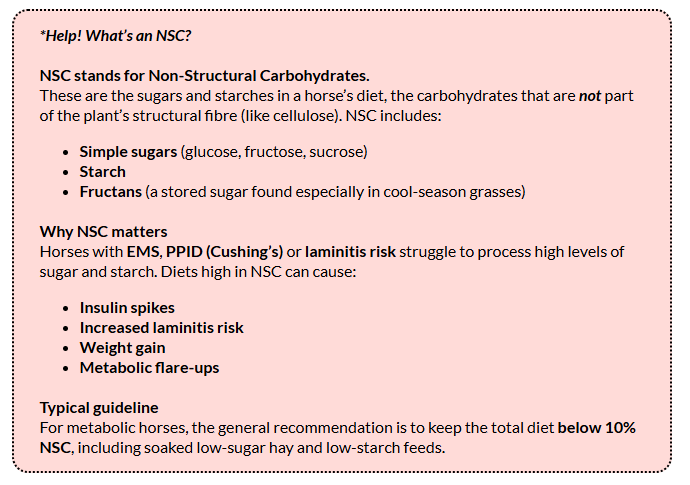
🌾Aim for <10% NSC (non-structural carbohydrates) in the total diet. This helps stabilise insulin levels and reduce laminitis risk.

2. Use Soaked, Low-NSC Hay

🧈 Soak hay for 1–2 hours in cold water to lower sugar content.

🧈Choose hay that is naturally low in sugar when possible. This should form the main forage source.

3. Avoid High-Starch and Sugary Feeds

Steer clear of:

🌾cereals

🌾sweet feeds

🌾mixes with molasses

🌾traditional high-starch conditioning cubes

These feeds can cause insulin spikes and increase the risk of laminitis.

4. Choose High-Fibre, Low-NSC Calorie Sources

If your EMS horse needs additional calories for warmth or weight maintenance, opt for:

🌰 unmolassed beet pulp

🌾 high-fibre balancers

🥣 feeds designed specifically for metabolic horses

These support weight without triggering insulin surges.

5. Monitor Weight Closely

Many EMS horses gain weight during winter due to reduced exercise or unintentional overfeeding.

⏲️ Use a weigh tape monthly

🌾 Adjust forage quantity and type as needed

🐎 Keep body condition around a score of 5/9

Cushing’s Disease (PPID)

Unlike EMS horses, those with PPID may:

🐎 struggle to keep weight on

💪 experience muscle loss

🦠 be more prone to infections

🐎 still have an increased laminitis risk

Winter can worsen these tendencies due to cold temperatures and fluctuating forage quality.

Winter Diet Priorities for PPID Horses

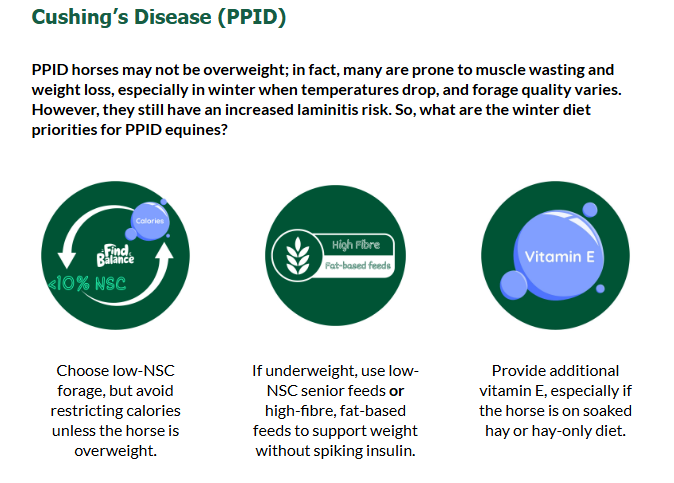
1. Choose Low-NSC Forage

🧈 Low-NSC hay is ideal, but avoid restricting calories unless your horse is overweight. PPID horses often need more energy, not less.

2. Support Weight With Suitable Feeds

If underweight, consider:

✔ low-NSC senior feeds

✔ high-fibre, fat-based feeds

✔ oil supplements (used gradually)

These provide safe calories without spiking insulin.

3. Supplement Vitamin E

Essential for:

💪 muscle health

🦠 immune function

🧈 horses on soaked hay or hay-only diets

Vitamin E levels drop significantly when hay is soaked.

4. Maintain Routine Dental Checks

PPID horses may have:

🦷 poor dentition

🦷 loose, fractured or overly long teeth

This can reduce their ability to chew hay efficiently, impacting winter calorie intake.

5. Continue Regular Veterinary Monitoring

Horses with PPID benefit from:

💉 routine ACTH testing

💊 ongoing medication management

🩺 close monitoring for laminitis, infections or weight changes

Work proactively with your vet to balance nutrition, exercise and medical management throughout winter.

When to Contact Your Vet

Get veterinary advice if you notice:

🐴 sudden weight loss or gain

🐴 laminitis signs (heat, digital pulses, reluctance to move)

🐴 changes in appetite

🐴 difficulties chewing or excessive quidding

🐴 recurring infections

🐴 lethargy or changes in coat condition

Early intervention can prevent winter complications and keep your metabolic horse healthy.

Written by Charlie Hands

 Back to news
 

Categories

Sign up to our newsletters

Select the newsletters you'd like to receive

Contact us Today
Payment Terms