Routine health checks can sometimes uncover unexpected findings. Fortunately, modern diagnostic imaging allows us to investigate further and provide owners with the answers they need.
When Barry, a much-loved Welsh pony from Blue Cross, was visited by Hook Norton Veterinary Group for a routine assessment, one of our equine vets detected an abnormal heart sound while listening to his chest with a stethoscope. Although Barry appeared bright and well, the findings warranted further investigation to better understand what was happening inside his heart.
Listening to a horse’s heart with a stethoscope is an important first step in assessing heart health. It allows vets to detect heart murmurs, irregular heart rhythms and other abnormal sounds that may indicate an underlying cardiac condition.
While some heart murmurs are completely harmless, others can be associated with structural changes within the heart. As it isn’t possible to determine the cause simply by listening, Barry was booked in for an echocardiogram (heart ultrasound) to investigate further.
An echocardiogram is a non-invasive ultrasound examination that provides detailed, real-time images of the heart. It allows vets to assess:
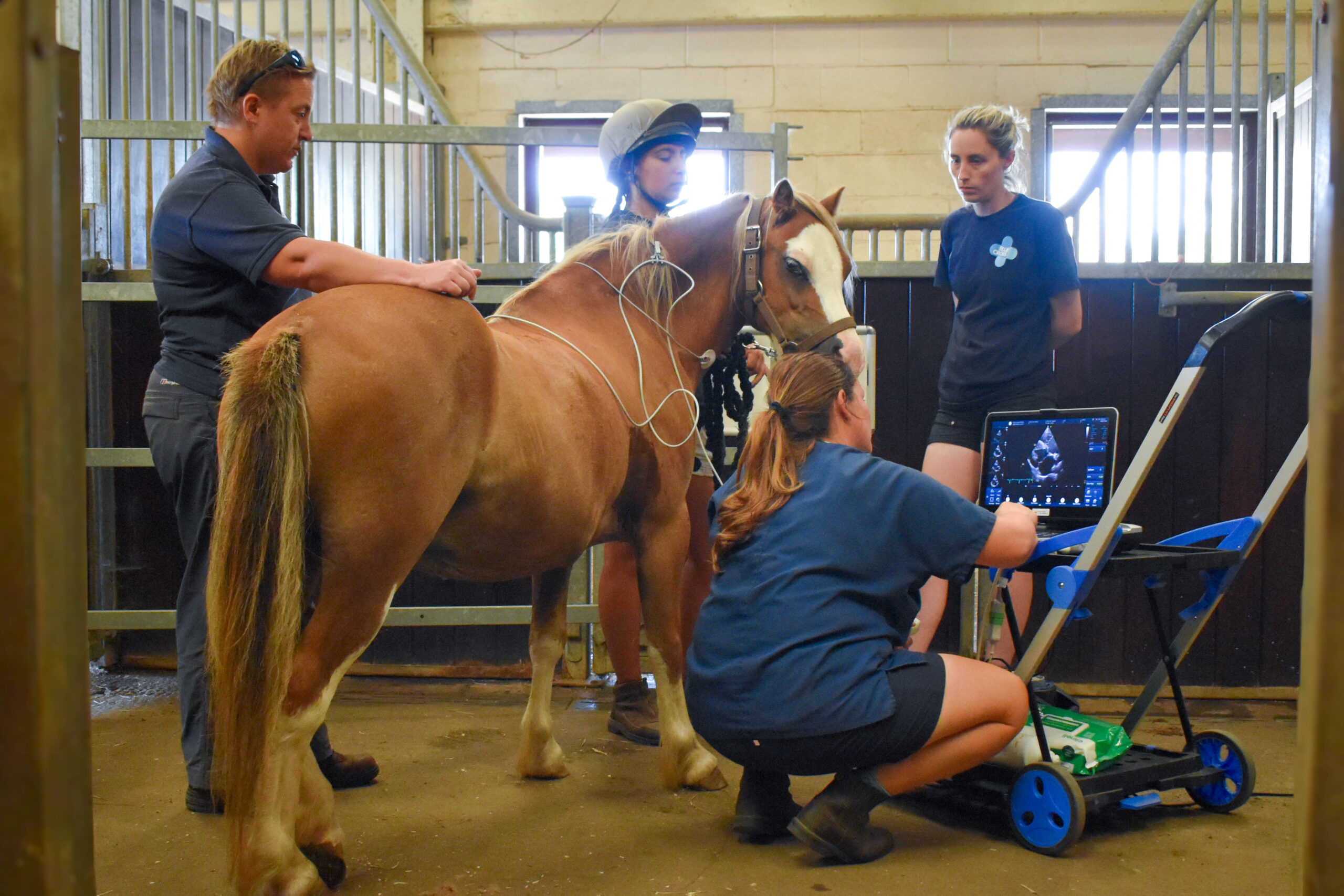
The examination is usually performed with the horse standing quietly and, in most cases, does not require sedation.
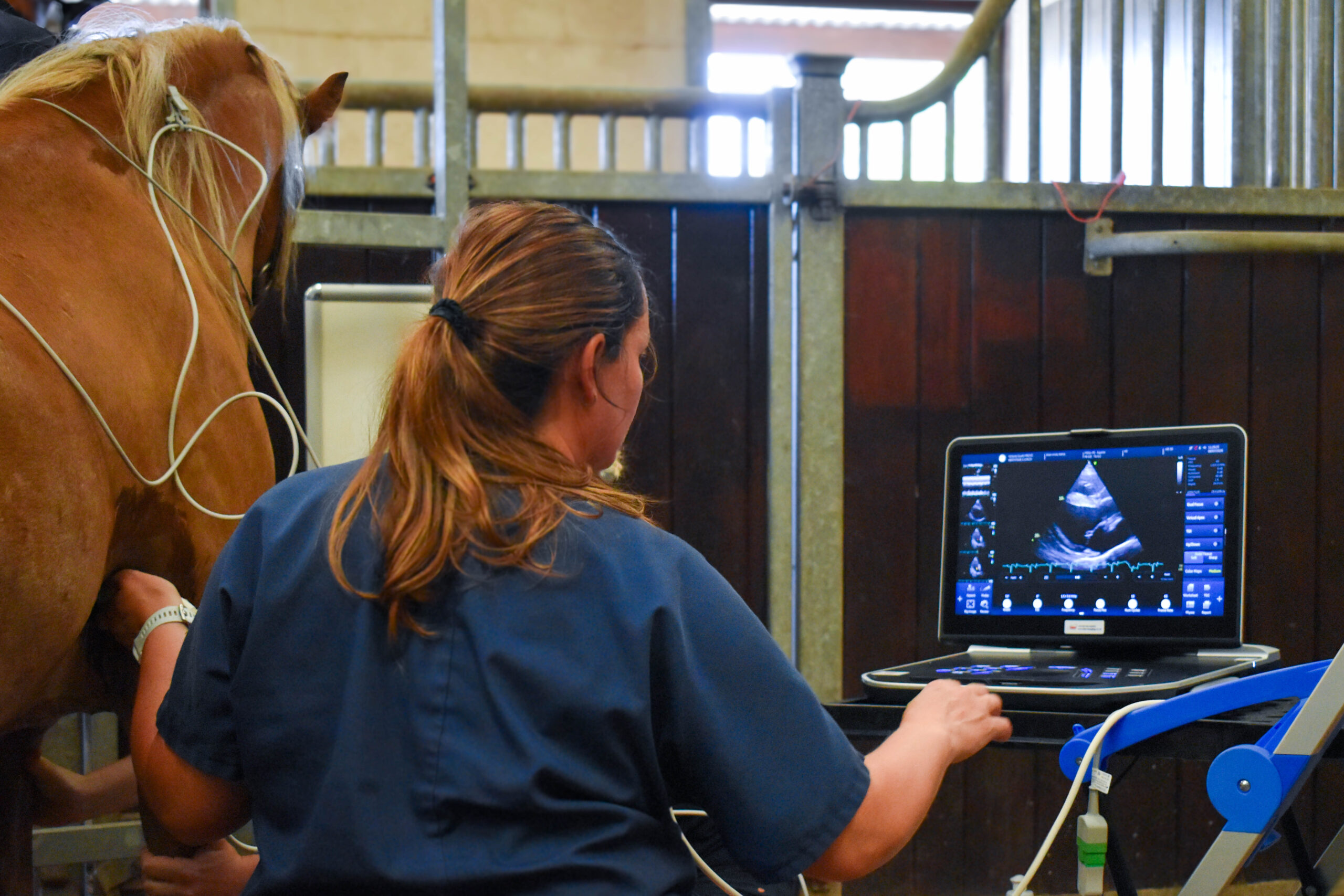
Barry stood patiently throughout his examination, happily occupied with a Horslyx while our equine team carried out the scan.
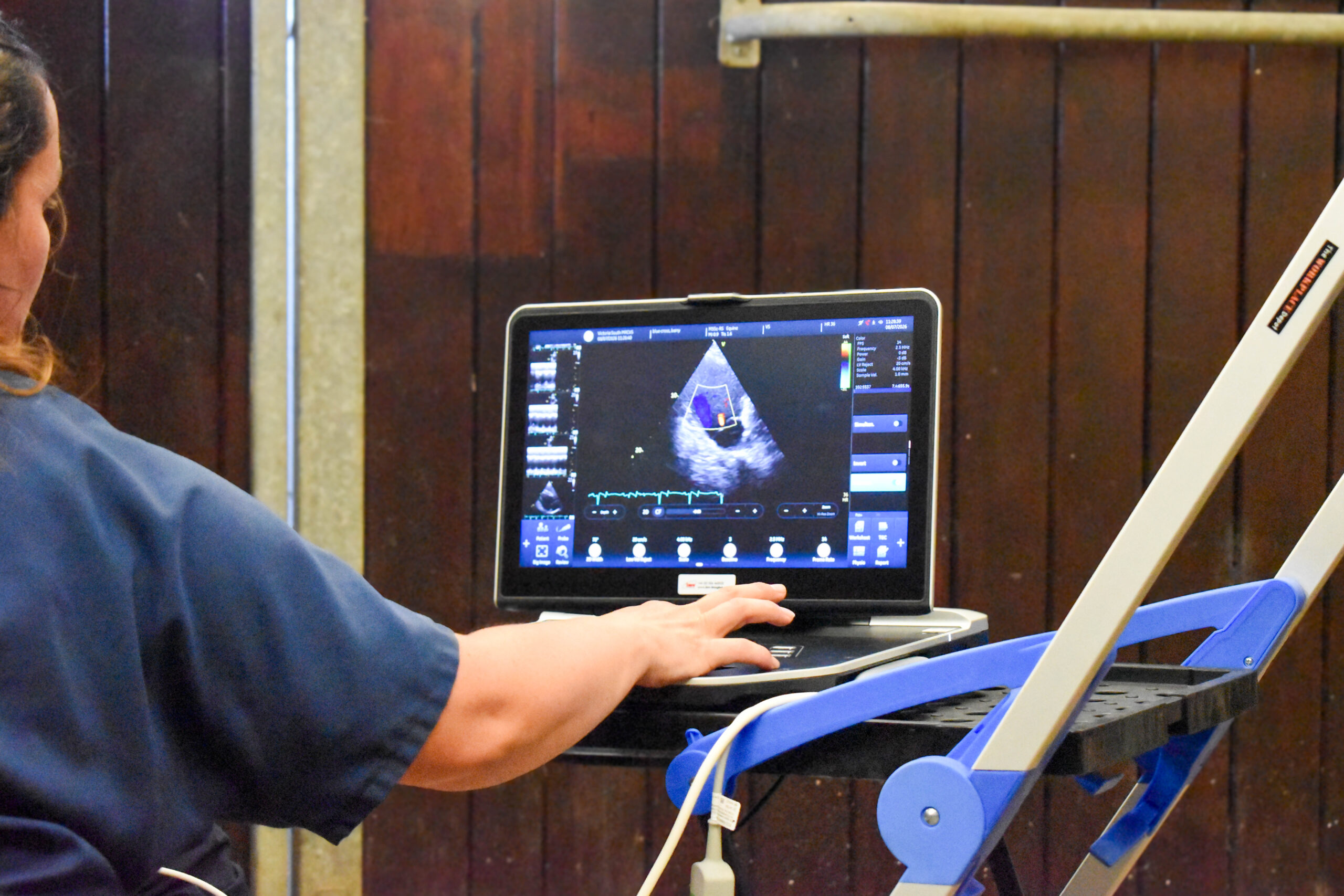
Using ultrasound imaging and Colour Doppler technology, we were able to carefully assess the structure of his heart and the movement of blood through it. The scan provided far more detailed information than could be obtained with a stethoscope alone.
The results brought reassuring news.
Although the initial examination had raised concerns, the heart abnormality was found to be much less significant than first feared. Barry’s prognosis is very good, and his condition is not expected to prevent him from enjoying a ridden career.
As a precaution, he will continue to have annual heart scans so we can monitor his heart over time and ensure there are no significant changes.
Barry’s case is a great reminder that hearing a heart murmur does not automatically mean a horse has serious heart disease. Further investigation is often the only way to determine exactly what is happening and, in many cases, the results are far more reassuring than expected.