Coprophagia (eating poo) is normal in foals – this is how they develop the large and very diverse population of bacteria, yeasts and other microbes they need for their hindgut to digest forage. In a few adult horses, eating poo may represent a micronutrient deficiency, but this is quite rare in horses fed a balancer or other bucket feed.
Instead, what we see in horses who choose to eat poo is an ethopathy – a ‘behaviour disease’. Ethopathies include stereotypical behaviours such as cribbing, weaving and windsucking, but can also be normal behaviours performed in an abnormal way or context. In contrast, stereotypical behaviours are repetitive, unchanging behaviours that are not seen in free-ranging horses. Behaviour diseases are often caused by multiple factors, such as physical discomfort, hunger, or being unable to perform a normal behaviour such as foraging.
The majority (up to 18 hours per day, or 75% of their time budget) of time is spent foraging. Foraging means looking for food – not just the time spent eating. If uninterrupted (for example, by flies, predators, or bad weather), horses usually won’t stop foraging for more than three hours at a time. Similarly, horses fed ad-lib concentrates take around 10 meals daily, rarely more than three hours apart, with nibbling/snacking episodes between meals. Horses are highly motivated to forage, so if the forage drive is frustrated, normal foraging behaviours may become redirected, for example, into eating bedding or faeces, chewing things, pacing, cribbing or windsucking. Housed horses only spend 15% of their time eating, leaving a large amount of empty time to be filled!
Coprophagy, wood chewing, and bedding eating may also reflect a motivation to eat outside of ‘mealtimes’ imposed by the yard routine in response to internal cues such as gut fill, time since the last meal, and falling blood glucose. The expression of these behaviours is often reduced by increasing the provision of hay, haylage, or grazing.
Feeding practices often drive the development of abnormal or redirected behaviour because they disrupt normal foraging behaviour. Horses will show complex behaviours to forage and browse when given access to species-rich pasture land that includes shrubs and perennial plants.
However, in a bare environment such as a stable, those complex behaviours become simplified into something the horse CAN do, such as your horse eating poo or bedding or performing stereotypical behaviours.
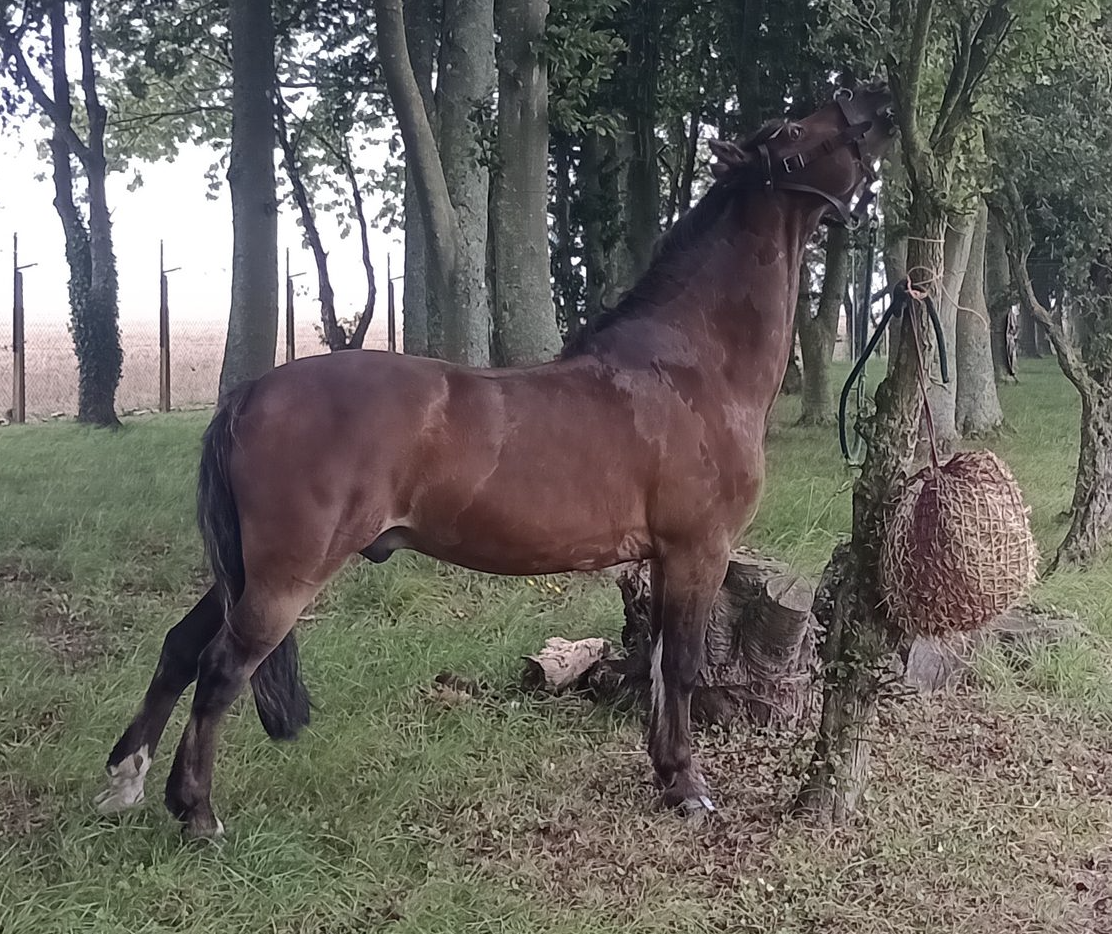
Stereotypies are associated with reduced athletic performance, health problems such as colic, and reduced monetary value. Devices preventing the horse from performing stereotypical behaviours further impair welfare, as a coping mechanism has been blocked. Methods to increase time spent eating or foraging, such as slow feeder hay bags, reduced the overall time a group of horses spent eating poo by 80% and stopped it completely in 75% of them. Horses fed hay spend about 65% of their time eating and 11% searching through bedding. Horses fed pelleted food spent only 10% of their time eating and 11% searching through bedding.
The recommended minimum amount of fibre a horse needs is 1.5% of bodyweight as dry matter per day – a 500kg horse needs a minimum of 7.5kg fibre as dry matter daily. For a typical hay, this means at least 9kg of actual hay daily. Horses have specific foraging motivations to obtain fibre – normal foraging may include chewing wood or bark, especially when the pasture is low in fibre.
Low fibre intake can be harmful in lots of ways! Just like hungry people, hungry horses can be aggressive and irritable, increasing their reactivity and risk of injury to handlers and riders. In a study exploring diet and abnormal behaviours in different groups of working horses, only crude fibre had a significant effect on the likelihood of eating droppings. Low fibre and high digestible energy were associated with eating droppings. A diet high in fibre promotes chewing – typically 3400 chews per kg, or 43,000 chews per day in horses fed ad-lib hay. Chewing promotes saliva production. Saliva is rich in sodium bicarbonate and acts as an important buffer against stomach acid, reducing the risk of gastric ulcers.
Fibre isn’t the only dietary component that can influence equine behaviour. In horses fed a high starch diet plus high fibre content, eating droppings and aggressive behaviour both reduced when the starch was partially replaced by fat.
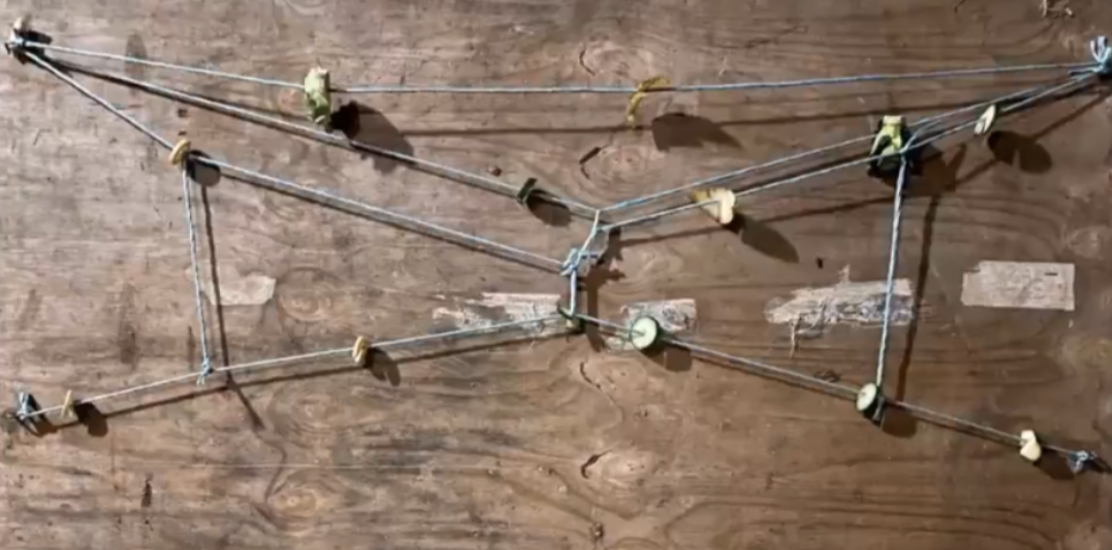
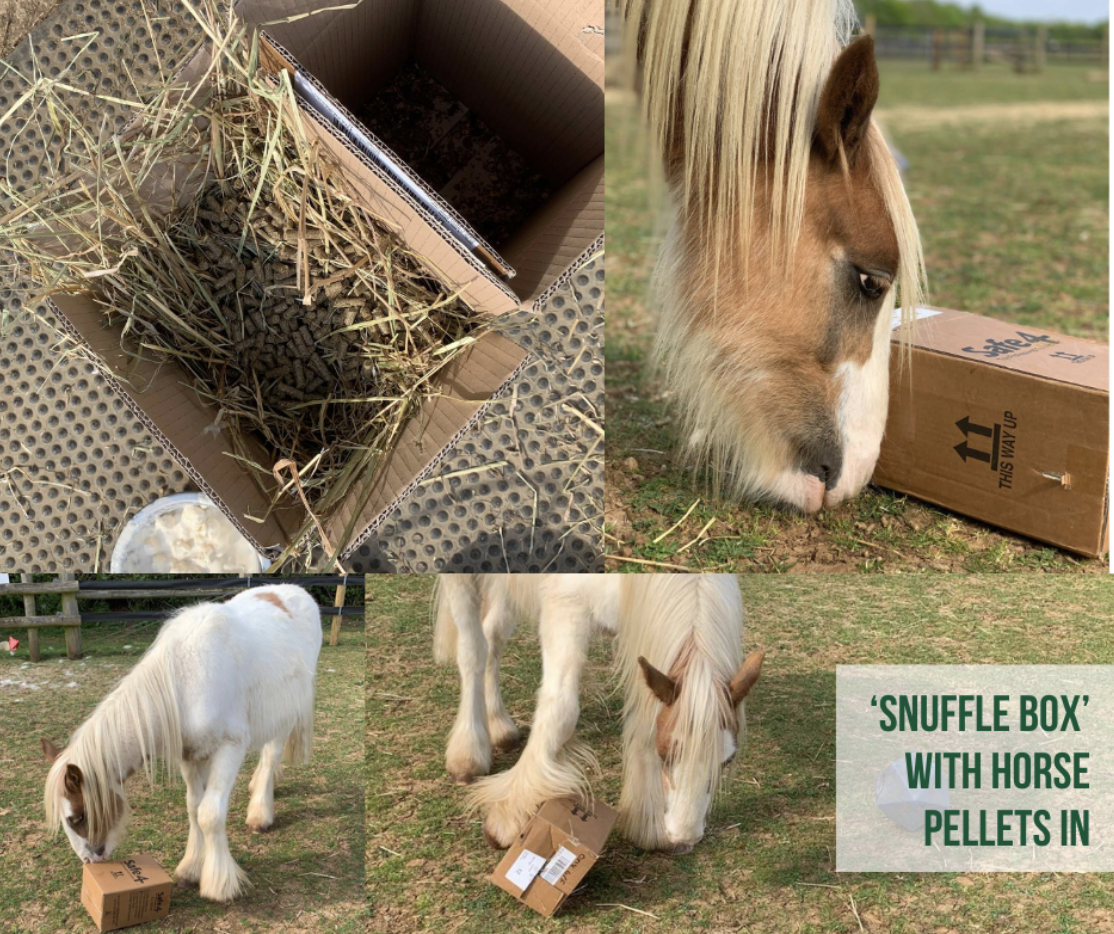
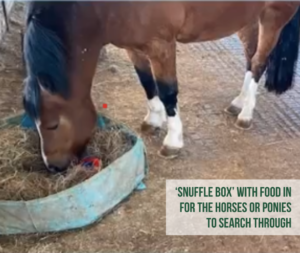
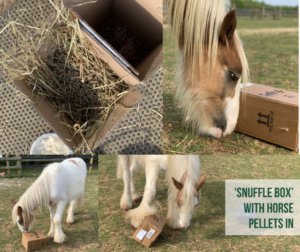
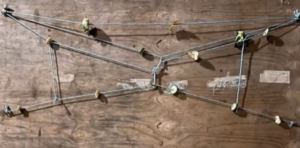
For many horse owners, weight management can be a real problem, and feeding ad-lib forage isn’t possible for all horses. Instead, we need to get inventive and find ways to facilitate foraging (searching for food) rather than presenting an easy-to-eat pile of hay. Slow feeder devices are available for hay and concentrates, and there are many ways to present your horse with stable-based foraging opportunities – see below for some ideas! Horse welfare is centred on friends, forage and freedom – we can’t always meet all of those needs perfectly, but any steps we can take will improve our horses’ wellbeing.
Written by Sally Hodgson. Senior HNVG Equine Vet, BSc (Hons), MA, VetMB, Cert AVP (EM), MRCVS.
Sally’s caseload is quite varied. She has particular interests in farriery and internal medicine and has a Certificate in Advanced Veterinary Practice (Equine Medicine).